In an era defined by rapid technological acceleration, digital competence is no longer a specialized advantage
it is a foundational life skill. From schoolchildren navigating online classrooms to retirees managing digital banking, the ability to use technology confidently and responsibly determines access to opportunity, information, and economic mobility. Empowering all age groups with essential tech skills is therefore not merely an educational objective; it is a social and economic imperative. มอเตอร์โชว์ 2026
Digital literacy today extends far beyond basic device operation. It encompasses information evaluation, cybersecurity awareness, data privacy management, online collaboration, and adaptive learning. As artificial intelligence, automation, and cloud ecosystems continue to reshape industries, individuals who lack technological fluency face increasing barriers in both professional and personal contexts. มอเตอร์โชว์ 2026
Early Foundations: Building Competence in Youth
For children and adolescents, early exposure to structured technology education fosters not only operational proficiency but also computational thinking. Coding fundamentals, digital creativity tools, and safe internet practices cultivate analytical reasoning and problem-solving skills. More importantly, teaching responsible digital citizenship—such as recognizing misinformation and understanding digital footprints—establishes habits that protect long-term reputation and security.
Educational institutions play a central role in standardizing access. However, equitable empowerment requires closing infrastructure gaps, ensuring reliable internet connectivity, and providing educators with ongoing professional development. When teachers are confident in digital tools, they model effective and ethical technology usage.
Workforce Relevance: Upskilling and Reskilling Adults
For working professionals, technological evolution demands continuous learning. Automation and AI integration are transforming job functions across sectors—from manufacturing and logistics to marketing and healthcare. Employees who understand data analytics platforms, collaboration software, cybersecurity hygiene, and AI-assisted workflows maintain higher productivity and employability.
Organizations that invest in structured upskilling programs achieve measurable competitive advantages. Training initiatives should be modular, role-specific, and outcome-driven. Rather than overwhelming employees with abstract theory, programs should emphasize applied learning—real scenarios, hands-on simulations, and measurable performance indicators.
Furthermore, digital confidence reduces resistance to transformation. When employees feel competent, they are more likely to adopt new systems efficiently. This reduces implementation friction and accelerates return on technology investments.
Empowering Older Generations: Inclusion and Independence
Technology empowerment for older adults addresses a different but equally critical dimension: social inclusion and autonomy. Many essential services—banking, healthcare appointments, government transactions—are now digital-first. Without foundational tech skills, seniors risk exclusion from basic services.
Programs designed for older learners must account for cognitive pacing and ergonomic considerations. Clear interface navigation, repetition-based training, and patient instruction foster confidence. The objective is not mastery of every application but functional independence: sending messages, conducting secure transactions, recognizing phishing attempts, and accessing telehealth platforms.
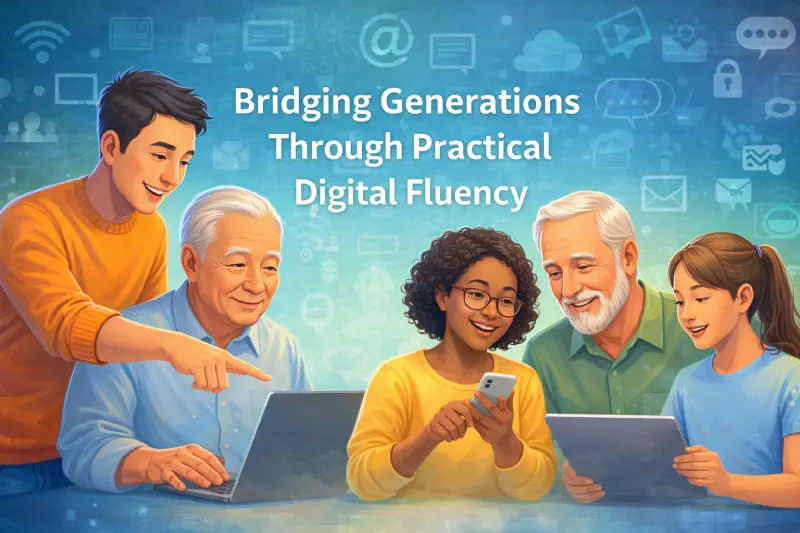
Intergenerational learning models are particularly effective. When younger family members mentor older relatives, both groups benefit. Seniors gain technical support, while youth reinforce their knowledge and develop communication skills. This dynamic also strengthens social bonds.
Cybersecurity as a Universal Competency
Across all age groups, cybersecurity awareness is non-negotiable. Phishing attacks, identity theft, and misinformation campaigns exploit gaps in digital literacy. Empowerment must therefore include training on password management, multi-factor authentication, privacy settings, and critical evaluation of online content.
Digital resilience—the ability to recognize, respond to, and recover from cyber threats—is now a core life competency. Embedding this knowledge into educational curricula, workplace training, and community workshops creates a more secure digital ecosystem overall.
Strategic Framework for Inclusive Tech Education
To effectively empower all ages, stakeholders must adopt a multi-layered strategy:
- Infrastructure accessibility: affordable devices and reliable internet connectivity
- Structured curriculum pathways tailored to age and context
- Practical, scenario-based training rather than purely theoretical instruction
- Ongoing assessment and feedback mechanisms
- Public-private partnerships to scale impact
Governments, corporations, non-profits, and educational institutions share responsibility in implementing these frameworks. Sustainable impact requires long-term investment rather than one-time workshops.
Conclusion: Technology as a Tool for Collective Advancement
Empowering all generations with essential technology skills is not about chasing trends; it is about ensuring equitable participation in a digitally mediated world. When children learn responsible digital citizenship, adults maintain adaptive professional relevance, and seniors achieve functional independence, society benefits collectively.
Technological progress will continue to accelerate. The decisive factor will not be access to innovation alone, but the capacity of individuals across all ages to engage with it confidently, critically, and securely. Digital fluency, therefore, is not optional—it is foundational to inclusive growth and sustainable development.

Leave a Reply